Wholesale Batana Oil Pricing: What Actually Drives the Per-Kilo Cost
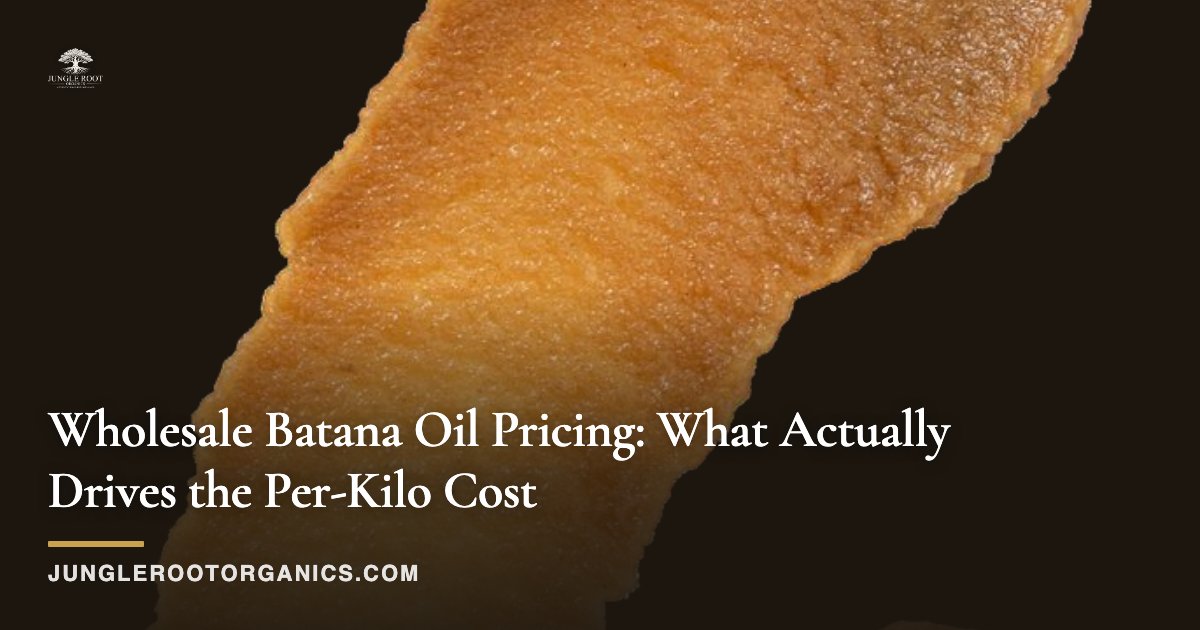
A wholesale batana oil price mostly comes down to how the oil is made (hand-processed in small batches), the harvest season, order size and packaging, the documents that come with each lot, freight and Incoterm, and payment terms. To compare two quotes fairly, put both on the same Incoterm and the same documents, then work out the landed cost per kilo you can actually use, not the price per kilo on the invoice.
Why is there no single wholesale batana oil price?
Batana oil is not a commodity oil with a daily posted price. It comes from the American oil palm, Elaeis oleifera, and raw, traditionally hand-processed oil is made in small batches. Supply depends on harvest timing and on how much labor goes into each batch. Two quotes that look alike on paper can describe very different products and very different terms.
When a buyer asks us for a price per kilo, the honest answer starts with questions. How much do you need? In what packaging? Delivered where, and on which Incoterm? Which documents does your QA team require? Each answer changes the number. This guide covers each of those variables so you can read any quote, ours included, with a clear eye.
How do hand processing and harvest season affect the quote?
Our oil is raw, 100% pure, unrefined and virgin. It is never bleached, deodorized, solvent-extracted, diluted or blended. That means no refinery step to standardize it and no solvent step to push yield higher. Hand processing in La Mosquitia, Honduras takes time and skilled labor, and that cost is part of the oil. You can read more about how this works on our batana sourcing in La Mosquitia page.
Season matters as well. The fruit is harvested on a natural cycle, so availability tightens at some points in the year. That is why our lead time is 1-2 weeks depending on season. If you are planning a launch, share your forecast early. Buyers who plan ahead usually get steadier pricing than buyers who need a drum urgently during a tight stretch.
A practical warning: if a quote comes in far below what hand-processed raw oil normally costs, ask how the oil was made. Refined, deodorized or blended oil costs less to produce, and it is a different ingredient.
Does lot size and drum vs pail packaging change the per-kilo cost?
Yes, and usually more than buyers expect. Packaging, filling, labeling and handling cost about the same whether a container is small or large. Spread over more kilos, those fixed costs shrink per kilo. Our formats show the range:
- 4 oz evaluation jar: for lab work and sensory checks, not for production costing.
- 1-gallon food-grade pail: for pilot batches and formulation trials.
- 25 kg trial pail: for small production runs and launching brands.
- Drums: the wholesale unit and the lowest per-kilo cost.
Our minimum wholesale order is one drum, 33 to 75 gallons, and we are flexible for brands that are launching. Drum size affects your side too. A larger drum lowers the per-kilo cost, but think about your batch size, storage space and how you will dispense the oil. Raw batana thickens when cool, so plan for warming and decanting.
What documents should come with each lot, and do they affect price?
Documents are part of what you are paying for. Know which ones are included before you compare quotes. With our wholesale orders you receive:
- An annual Certificate of Analysis based on representative sampling
- A per-lot batch document
- A technical data sheet and SDS
- A certificate of origin
If your QA process needs lab testing on a specific batch, we can arrange it on request at the buyer's cost. Treat that as its own line in your costing, not something assumed to be in the base price. The full document set is described on our batana oil specifications and documents page.
When you compare suppliers, check exactly which documents each one provides. One quote may look cheaper only because it leaves out paperwork your regulatory or retail partners will ask for later.
How do freight, Incoterms and payment terms change what you actually pay?
The Incoterm decides who pays for and carries risk on each part of the trip. A price ex works at the mill and a price delivered to your door are different numbers, even for the same oil. Before you compare anything, confirm the Incoterm on each quote and list the costs it leaves to you: inland freight, export clearance, international freight, insurance, import duties, brokerage and final delivery.
Our oil ships direct from our mill in Honduras, so there is no middle warehouse adding handling costs. Your landed cost still depends on mode (air or ocean), destination and consolidation. A single drum by air works out very differently per kilo than several drums by sea.
Payment terms also carry a cost. Prepayment, deposits and credit terms each affect your cash flow and, for many brands, financing costs. Put a value on that when you weigh one quote against another.
How do you compare two batana oil quotes fairly? A checklist
Use these steps every time you receive competing bulk quotes:
- Check the product spec. Confirm both oils are raw, unrefined, undiluted Elaeis oleifera oil. Ask about bleaching, deodorizing, solvents and blending.
- Match the documents. List what comes with each lot and add the cost of anything missing that you would need to buy separately, such as batch-specific testing.
- Convert to one Incoterm. Add freight, insurance, duties and brokerage until both quotes are delivered to the same place.
- Make the units the same. Convert gallons, liters and kilograms to net kilograms, using the density figure from each supplier's technical data sheet.
- Calculate landed cost per usable kg. Add every cost (oil, packaging, freight, duties, testing, financing) and divide by the kilos you can actually put into a batch. Subtract oil left on container walls, the drum heel and any material you reject.
- Compare lead time and consistency. A cheaper lot that arrives late or varies from lot to lot can cost you a production run.
The formula is simple: total landed cost divided by usable net kilograms. That figure is the one to bring to your finance team.
What is the smartest way to get an accurate drum quote?
Start with a paid evaluation sample so your formulators can check color, texture and how the oil behaves in your base. We do not offer free samples. You can order a 4 oz jar or a 1-gallon pail from our evaluation samples shop, and the cost of the 1-gallon pail is credited toward your first drum order.
When you are ready, send us your expected volume, preferred drum size, destination, Incoterm, required documents and target timing. The more detail you give, the more accurate your quote will be. Request a wholesale drum quote and we will put together a quote that matches your specifications, with private-label options if you need them.
Buying batana for a product line?
Tell us what you make and the volume you need. We reply personally within 24 hours with wholesale terms, our Certificate of Analysis and the technical data sheet.
Questions buyers ask
Do you publish a price list for wholesale batana oil?
No. Price depends on volume, packaging, destination, Incoterm, documents and payment terms, so we quote each inquiry separately. Send your requirements through the wholesale buyer form and we will reply with a specific quote.
Is batch-specific lab testing included in the drum price?
Not by default. Wholesale orders come with an annual Certificate of Analysis based on representative sampling, a per-lot batch document, a technical data sheet, an SDS and a certificate of origin. Testing on a specific batch can be arranged on request at the buyer's cost.
Can a small brand order less than a full drum?
Our wholesale minimum is one drum, 33 to 75 gallons, and we are flexible for brands that are launching. For trials before that, the 25 kg trial pail and the 1-gallon pail are useful in-between steps.
Why does raw batana oil cost more than some other bulk oils?
It is hand-processed in small batches from a seasonal harvest and is never refined, solvent-extracted, diluted or blended. None of the usual shortcuts that lower production cost are used. You are paying for an authentic raw ingredient with documented single origin.
Does the oil's texture affect my real cost per kilo?
It can. Raw batana thickens when cool, so if you do not warm it before decanting, some oil stays in the drum or pail. Plan for gentle warming and count any leftover residue when you work out usable kilograms.